Challenges of the Martian Environment
- Based on Data provided by NASA -
Low Pressure
Extremely thin atmosphere (7–12 millibars). This causes liquid water to boil at 0°C and leads to severe desiccation.
Temperature
Temperature swings in Jezero Crater are extreme: daytime highs can approach about −22 °C and nighttime lows can reach around −83 °C.
Radiation
Lack of a strong magnetic field and ozone layer. This results in high levels of UV and ionizing radiation, which can damage or destroy material integrity.
Toxic Regolith
Martian soil contains high concentrations of perchlorates, which are strong oxidants and bioinhibitors.
Lack of Water
Liquid water is unstable on the surface. It exists primarily as subsurface ice.
Watch our Video!
Biopolymer-Regolith Composite Generation via Radiation Curing (BRC)
Proposes an Additive Bio-Manufacturing process to create thermo-resistant insulating geometries directly on Mars, using only:
- Mission polymer waste (PET, PE, etc.).
- Martian Regolith (MGS-1).
- Specialized microorganisms (bacteria and fungal mycelium).
- Abundant solar UV radiation.
Inspiration: "Esperanza"
The concept aligns with María Jesús Puerta’s “Esperanza” project (a NASA award-winning initiative) for the Moon, an AI-driven digital twin designed to optimize recycling routes (magnetic separation, pyrolysis, use of regolith and melting) and ensure self-sufficiency. In a way, this parallel validates our own proposal, demonstrating that intelligent, closed-loop resource management systems are both feasible and strategically essential for sustainable off-world operations.

Flow Diagram
Phase I: Depolymerization (Biological Degradation)
- Collection and Preparation: Polymer waste from the mission (e.g., PET, PUR, PE from packaging, containers, and textiles) is collected and classified with the help of AI.
- Biorecycling: The prepared polymers are introduced into sealed bioreactors containing the selected microorganisms. The bacteria metabolize the polymers, breaking them down into their constituent monomers (e.g., ethylene glycol) and oligomers.
Phase II: Biocomposite (Material Blending)
- Base Mixture: The resulting monomer/oligomer-rich liquid is mixed with fine Martian regolith, which provides structural integrity, insulation, and radiation shielding properties.
- Fungal Inoculation: The mixture is inoculated with a resilient strain of mycelial fungus (e.g., Ganoderma), which will act as a natural binding agent.
- Homogenization: A small amount of a compatible bio-resin is added to create a homogenous "construction ink" ready for molding.
Phase III: Fabrication/Mycelial Growth
- Molding: The biocomposite is poured or injected into pre-fabricated molds designed to create insulating plates, bricks, or other custom geometries.
- Bio-Cementation: Inside the molds, the fungal mycelium grows, consuming residual nutrients. Its hyphae spread, weaving through the regolith particles and creating a dense network of chitin—a natural biopolymer. This process binds the entire structure into a solid, lightweight composite.
Phase IV: UV Curing and Hardening
- UV Exposure: Once the mycelial growth is complete, the composite is exposed to the intense ultraviolet (UV) radiation of the Martian surface.
- Hardening: The UV radiation cures the bio-resin and sterilizes the outer surface, resulting in a durable, inert, and structurally sound insulating material.
Validation and Strategic Analysis
The financial and logistical feasibility analysis confirms that in-situ recycling through biotechnology is a mission-essential strategy for Martian self-sufficiency, avoiding costly launches from Earth.
Estimated Direct Savings
$5.67 BILLIONS USD
Cost avoided by not launching 56.7 metric tons of material from Earth (~$100,000/kg).
Total Production (BRC)
56,700 KG
Useful insulating and resistant material fabricated from 5,670 kg of plastic waste.
Logistic Optimization
2.84 LAUNCHES
Heavy cargo flights avoided, allowing for the prioritization of science or habitats.
Biocomposite Fidelity
10:1 CPR
Composite Production Ratio: 1 kg of polymer binds 9 kg of regolith.
Waste Analysis: Polymer Origin (45% of Total Trash)
Bio-AI Recycling Assistant 🤖
Enter the waste polymer code (e.g., PET, PE, PUR, PS, PVC, PMMA, PLA) and the recycling AI will suggest the most efficient biological organism for Depolymerization (Phase I).
AI System: Awaiting polymer query...
Final Biocomposite Microstructure
Bio-Martian Insulation Composite
3D Visualization of the Matrix Binding Regolith, Decomposed Polymer, and Mycelium.
Red Frame: Martian Regolith with Plastic Resin | Blue Dots: Depolymerized Polymers | Green Lines: Fungal Mycelium (Biological Link)
Automatic Rotation Activated | Interactive: Use mouse/touch to rotate and zoom.
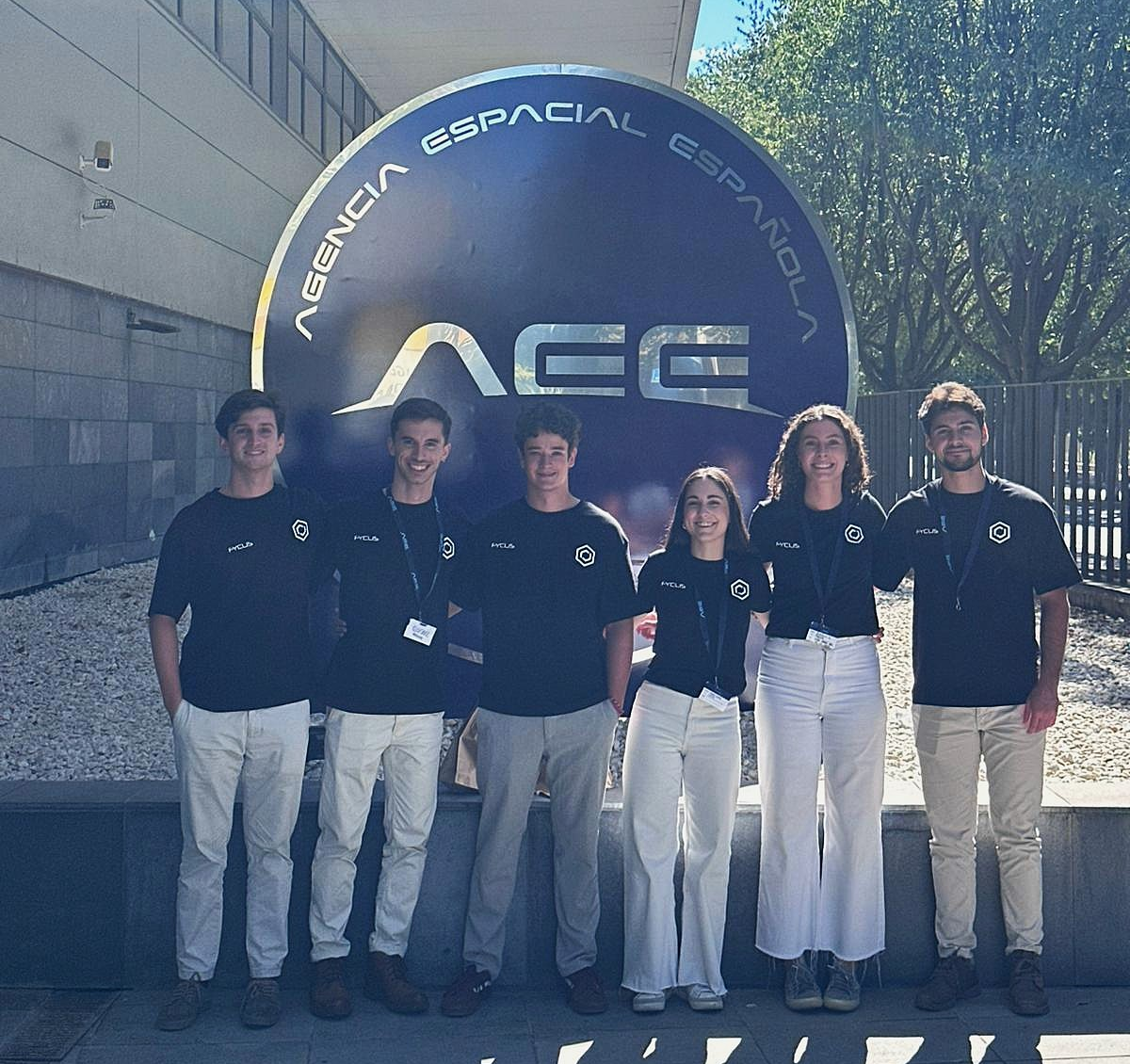
Our Team